
Driving Agency Essex: How Driver Hire Elgin and Essex Talent Can Keep Your Logistics Moving Today
A modern Driving Agency Essex is no longer just a supplier of temporary drivers. It is a compliance partner, a workforce risk manager, and a rapid response team for transport, distribution, construction, and logistics operations. Whether you need seasonal relief drivers, multi-drop van drivers, HGV professionals, or specialist support for a wider recruitment campaign, the right agency can reduce disruption and improve delivery certainty. If your operation also involves cross-border planning, Driver Hire Elgin may be part of a larger staffing conversation, especially when national coverage, regional flexibility, and consistent vetting standards matter to your business.
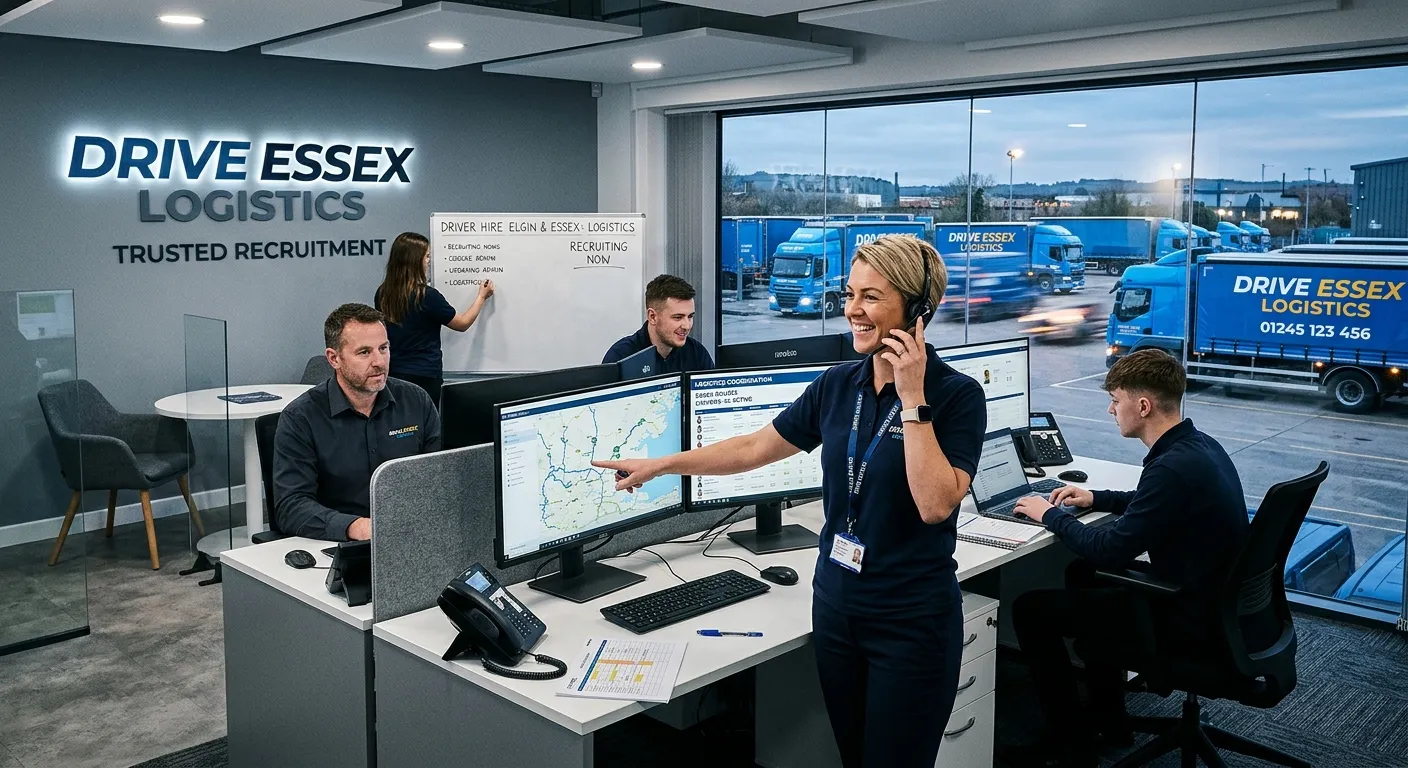
Interactive Overview: What a Driving Agency Essex Actually Delivers
Many employers search for a driving agency but still think only about filling a single shift. In practice, a strong agency relationship covers several workforce categories at once. Use the tabs below to compare the most common service areas and see how a specialist driving agency supports both immediate hiring and long-term workforce planning.
Core Driving Agency Services
A Driving Agency Essex typically provides temporary and contract drivers across multiple vehicle classes. That may include 3.5-tonne van drivers, 7.5-tonne drivers, HGV Class 1 and Class 2 operators, multi-drop delivery drivers, tipper truck drivers, and drivers who also perform light manual duties. The key value is not simply the licence category. It is the agency’s ability to match experience, route knowledge, vehicle compatibility, and reliability to the job profile.
- Short-notice cover for sickness, holiday, or absence
- Weekend, bank holiday, and night shift support
- Drivers experienced in retail, construction, waste, and food distribution
- Repeat drivers for predictable depot routines
- Support for both single-shift cover and longer assignments
Driver Hire Elgin & Regional Reach
While Driving Agency Essex is the primary search focus for employers in the eastern England corridor, logistics rarely respects county boundaries. A national transport operation may need consistent vetting across regions, which is why terms like Driver Hire Elgin can appear in the same planning conversation as Essex, Chelmsford, London, or Midlands coverage. The practical point for employers is this: if your fleet moves across regions, your staffing partner should understand multi-site compliance, local labour availability, and route-specific driver expectations.
For employers looking beyond Essex, it is worth reading guidance on Hire HGV Drivers in Chelmsford | Expert Guide and Driver Hire Birmingham West: HGV & Logistics Talent Guide to see how regional driver markets differ in supply, shift patterns, and wage expectations.
Compliance, Vetting & Payroll
The strongest driving agencies do not just send a CV. They verify licence validity, check entitlements, confirm right-to-work status, review employment history, and ensure drivers understand site rules, vehicle handling expectations, and safety documentation. Payroll accuracy is equally important because late or incorrect payment can damage driver retention at exactly the moment your operation needs reliability.
Pro Tip: Ask your agency how they handle licence checks, tachograph familiarity, vehicle category verification, and incident escalation. A mature provider will have documented processes rather than informal assurances.
On-Demand Fleet Staffing
On-demand staffing has become essential for businesses that face unpredictable peaks. A retail distribution centre may need extra drivers before a campaign launch. A construction supplier may need drivers for a sudden project surge. A courier network may lose drivers to illness during a busy week. A flexible agency model helps you scale without the fixed cost of permanent recruitment.
This is closely linked to broader on-demand staffing strategies, where employers combine temporary drivers with warehouse, logistics, and operational support staff to reduce bottlenecks.
Key Benefits of Using a Specialist Driving Agency in Essex
The difference between a general recruitment provider and a specialist driving agency is speed, accuracy, and risk control. The following benefits show why transport managers increasingly prefer agencies that understand depot culture, vehicle categories, and driver expectations.
Faster Deployment
A specialist agency can reduce time-to-hire by maintaining an active pool of pre-vetted drivers. This matters when a shift is already at risk and the operation cannot wait days for a permanent recruitment process.
Better Match Quality
Driver roles are not interchangeable. A multi-drop van driver, a Class 1 trunk driver, and a construction plant support driver all need different strengths. Good agencies screen for route experience, vehicle handling, and site behaviour.
Reduced Administrative Burden
The agency handles sourcing, initial screening, payroll, and often some compliance checks. Your transport manager can focus on loading schedules, customer promises, and depot performance rather than chasing paperwork.
Peak-Season Flexibility
Christmas, Black Friday, summer construction cycles, and sudden retail campaigns all create staffing spikes. Temporary drivers let you flex capacity without carrying permanent overheads year-round.
Stronger Compliance Posture
Licensed, vetted, and properly documented drivers lower operational risk. A good agency also helps with induction records, right-to-work checks, and ongoing monitoring, which is especially important in regulated logistics environments.
A Route to Permanent Hiring
Temporary assignments are often the safest way to test a driver before offering a permanent contract. That temp-to-perm model reduces bad hires and improves workforce stability over time.
About a Driving Agency Essex: What Employers Should Expect
A professional Driving Agency Essex should function as an extension of your transport team, not merely as a database of available licences. The best agencies understand that a driver may be the only person representing your brand at a customer site, a warehouse gate, or a construction access point. That means reliability, communication, and presentation matter as much as vehicle competence.
Employers should expect clear consultation before the first shift. That conversation should cover vehicle type, shift pattern, loading requirements, route knowledge, customer expectations, and whether the driver will need to handle paperwork, scanners, or light manual tasks. It should also cover what happens if a driver is late, if a vehicle is unavailable, or if a customer site has induction restrictions.
If you are also hiring for adjacent roles, such as warehouse operatives, forklift drivers, or depot supervisors, the right partner can help connect those pieces. For example, guidance from a Forklift Driver Recruitment Agency can be useful when transport and yard operations are managed together.
Three Questions to Ask Before You Choose
- • Do you pre-screen drivers for route experience, vehicle compatibility, and site behaviour, or do you only check licence categories?
- • What is your escalation process if a driver is unavailable, late, or unsuitable for the first shift?
- • How do you manage payroll accuracy, right-to-work checks, and ongoing compliance for repeat assignments?
Driver Hire Elgin in a National Workforce Plan
Although this article centres on Driving Agency Essex, the phrase Driver Hire Elgin is useful because it highlights a broader truth: logistics employers increasingly need staffing partners who can think regionally while operating nationally. A driver shortage in one county may be offset by available talent elsewhere, but only if the agency understands travel expectations, local accommodation, shift patterns, and compliance consistency.
For employers managing multi-site operations, the question is not only “Can you fill this shift in Essex?” but also “Can you maintain the same standard of vetting and reliability across other regions?” That is where a mature agency becomes valuable. It can support local delivery routes, regional distribution, and longer-term contract staffing without forcing the employer to rebuild its screening process every time.
In practical terms, this means employers should share not just the job title, but the full operating model. Are drivers expected to stay overnight? Are they covering a single depot or multiple sites? Are they using company vehicles or their own? Are there customer-specific induction requirements? The more context you give, the better the agency can match you to drivers who are genuinely suitable.
Expert Insights: How to Build a Reliable Driver Pipeline
The most successful employers do not wait until a shift is already broken before they call an agency. They build a pipeline. A pipeline is simply a repeatable system for sourcing, testing, and retaining drivers who already understand your operation. Below are practical, field-tested strategies from transport and logistics recruitment practice.
1. Define the Role Before You Advertise It
Many driver roles fail because the brief is too vague. “Class 2 driver needed” is not enough. Specify shift times, loading expectations, vehicle type, route complexity, whether the role involves handball, and whether the driver must communicate with customers. Clarity improves match quality and reduces first-shift failure.
A well-written brief also helps candidates self-select. Drivers who dislike manual handling, night work, or multi-drop routes will be less likely to apply if the expectations are visible from the start.
2. Use Temporary Assignments as a Screening Tool
Temporary work is one of the safest ways to evaluate a driver before committing to a permanent contract. You can assess punctuality, vehicle handling, paperwork accuracy, and customer-facing behaviour under real conditions.
For employers with fluctuating demand, temp-to-perm also allows you to convert only the strongest performers, improving retention and reducing the cost of failed permanent hires.
3. Invest in Driver Experience, Not Just Availability
Drivers are more likely to stay with employers who communicate clearly, pay on time, and treat them professionally. If temporary drivers are treated as disposable, they will behave that way. If they are given proper induction, correct equipment, and respectful scheduling, they become a reliable part of your operation.
This is especially important in competitive markets where good drivers can choose between agencies and direct employers.
4. Combine Driver Hire with Wider Staffing Strategy
Transport operations do not run on drivers alone. They depend on warehouse teams, supervisors, dispatch staff, and site support roles. If you are hiring drivers, it often makes sense to review adjacent staffing needs at the same time.
That is why many employers also look at Warehouse Operative Jobs in Trafford Park and similar logistics roles when planning wider workforce capacity.
Video Insight: Reducing Time-to-Hire in Logistics Recruitment
For employers under pressure to fill driver shifts quickly, reducing time-to-hire is often the single biggest operational challenge. The video below explores practical strategies for faster recruitment without compromising quality or compliance.
After watching, consider how your own process compares. Do you already have a pre-approved driver pool? Do you have a clear escalation route for last-minute absence? Do you measure how long it takes from brief to first shift? These questions often reveal simple improvements that can save hours during peak periods.
Practical Tips for Employers Hiring Through a Driving Agency Essex
If you are ready to hire through an agency, the quality of your outcome depends heavily on the quality of your briefing. The following checklist helps employers avoid common mistakes and improves the likelihood of getting the right driver first time.
- ✓ State the exact vehicle category required, including any restrictions or endorsements.
- ✓ Clarify whether the role includes loading, unloading, scanning, or customer interaction.
- ✓ Provide start and finish times, including realistic overtime expectations.
- ✓ Share site access rules, parking, welfare facilities, and induction requirements.
- ✓ Identify the most important success factors: punctuality, vehicle care, paperwork accuracy, or route knowledge.
Common Mistakes to Avoid
- ✕ Assuming all drivers of the same licence category can perform the same job.
- ✕ Withholding information about manual handling until the driver arrives on site.
- ✕ Failing to confirm whether the driver needs their own vehicle or can use a company fleet.
- ✕ Ignoring the importance of consistent payroll and communication for repeat assignments.
Frequently Asked Questions About Driving Agency Essex
A driving agency provides vetted temporary, contract, or permanent drivers for transport, delivery, construction, and logistics roles. It may also manage compliance checks, payroll, induction coordination, and ongoing driver support. The goal is to reduce risk while helping employers fill shifts quickly and reliably.
Yes. Many agencies operate across multiple regions and can support employers who need consistent standards in more than one location. If your operation spans Essex, other UK regions, or cross-border routes, ask the agency how they manage regional sourcing, local labour supply, and compliance consistency.
Speed depends on the vehicle category, shift time, location, and whether the role requires specific experience. In some cases, agencies can fill a shift within hours; in others, it may take a day or two. Employers who provide clear details and flexible start times usually get faster results.
Temporary driver hire can be more cost-effective for short-term demand because it avoids recruitment fees, benefits, and long-term overheads. However, for stable, year-round routes, permanent hiring may offer better economics. The best approach is often a hybrid model that uses temporary drivers for flexibility and permanent drivers for continuity.
At minimum, the agency should verify right-to-work, licence validity, and relevant endorsements. Depending on the role, it should also check employment history, vehicle experience, insurance considerations where applicable, and site-specific safety expectations. A strong agency will also have a process for handling incidents, absence, and repeat assignment feedback.
Yes. Many employers need drivers, warehouse operatives, supervisors, and dispatch staff at the same time. A wider recruitment partner can help you coordinate those roles under one strategy. This is especially useful for seasonal operations, new depot openings, or urgent fulfillment campaigns.
Choosing the Right Partner for Driving Agency Essex Recruitment
Choosing a driving agency is not only a procurement decision. It is an operational one. The agency you select will influence whether your shifts are covered, whether your drivers arrive prepared, and whether your customers experience a professional service. The right partner should be able to answer detailed questions about sourcing, vetting, payroll, incident management, and repeat performance.
A good agency will also be transparent about what it cannot guarantee. No provider can promise perfect availability every day, especially during peak seasons or in tight labour markets. But a strong agency will be honest about lead times, explain where trade-offs exist, and offer practical alternatives when a single-shift solution is not possible.
Employers should also consider whether the agency can support future needs beyond drivers. If you may need warehouse, logistics, or operational staff later, a partner with broader recruitment capability can save time and improve consistency. That is why many organisations look beyond a single job category and explore wider Hire Business Critical Professionals services when planning workforce resilience.
How to Structure a Driver Hiring Plan That Lasts
Step 1
Assess Demand
Identify which routes, shifts, and vehicle categories are most at risk. Look at absence rates, seasonal peaks, and customer commitments to determine where temporary cover is needed most.
Step 2
Brief Clearly
Create a standard driver brief that covers shift times, vehicle type, manual handling, site access, and customer expectations. The clearer the brief, the better the match quality.
Step 3
Test and Track
Use temporary assignments to evaluate drivers in live conditions. Track punctuality, vehicle care, paperwork accuracy, and feedback from depot teams or customers.
Step 4
Build a Pool
Convert your best temporary drivers into a preferred pool. Over time, this creates a more predictable workforce and reduces pressure during last-minute shortages.
Expert Insight: The strongest driver hiring plans are not built around one urgent shift. They are built around a repeatable process: clear briefs, strong screening, fast feedback, and consistent communication. That is how employers turn short-term staffing into long-term operational stability.
Ready to Hire Reliable Drivers Through a Driving Agency Essex?
If you need immediate driver cover, a stronger pipeline, or a more efficient way to manage temporary logistics staffing, the next step is simple. Share your requirements, your shift patterns, and your compliance expectations so the right candidates can be identified quickly.
Whether your focus is Driving Agency Essex, Driver Hire Elgin, or a wider national staffing plan, clear communication and a structured hiring process make all the difference.
Recruiting Today helps employers build faster, safer, and more flexible workforce strategies across logistics, transport, warehousing, and operational roles.