The Ultimate Guide to Candidate Screening: Strategies, Tools & Future Trends
Master the art of identifying top talent efficiently. Our comprehensive guide reveals the proven strategies and innovative tools you need to build a world-class team.
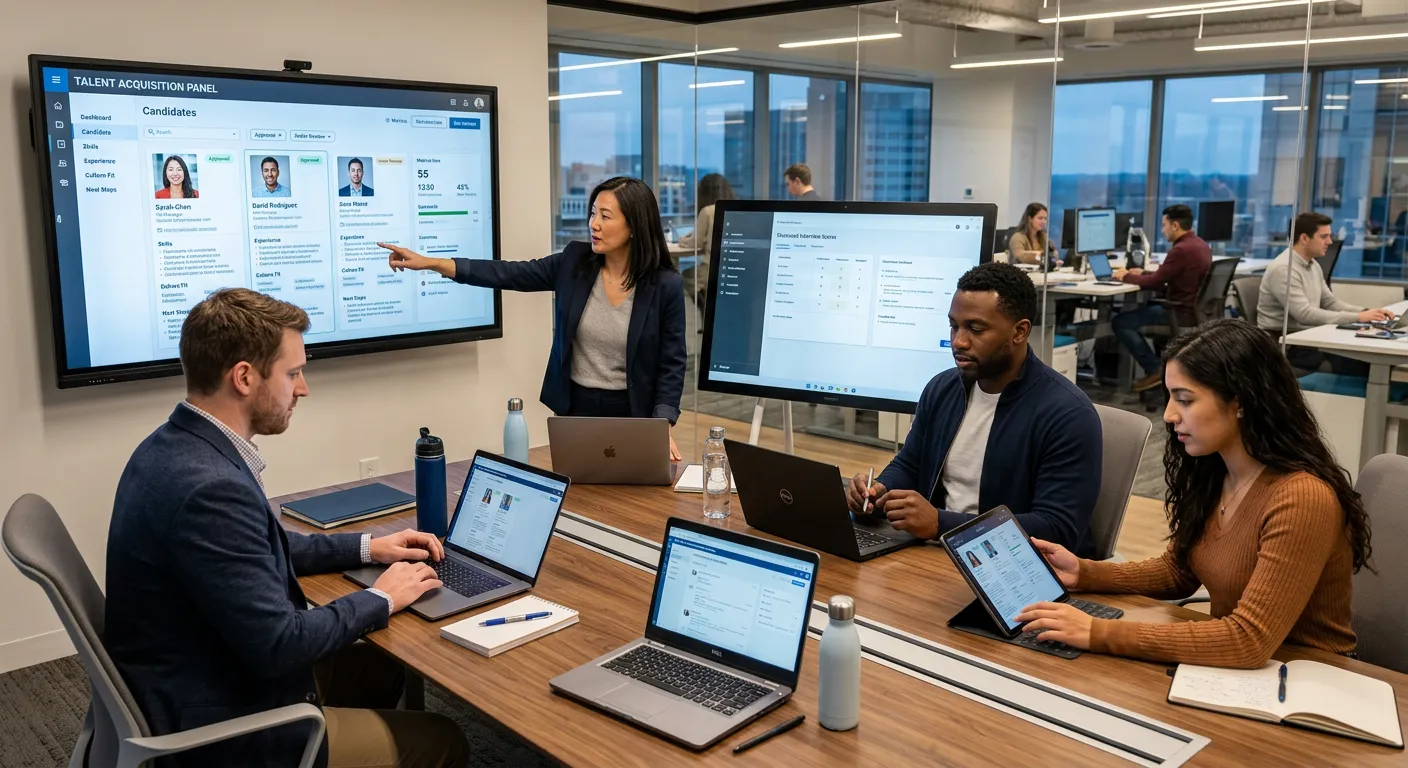
In today's competitive talent landscape, effective candidate screening is the critical linchpin between a flood of applications and a shortlist of exceptional hires. It's the systematic process of evaluating applicants against job requirements to identify the most qualified individuals, saving time, reducing bias, and improving hiring quality. For businesses looking to hire business-critical professionals or manage seasonal surges like those detailed in our September 2025 Hiring Boom analysis, a robust screening strategy is non-negotiable. This guide will provide a deep dive into modern screening methodologies, from foundational practices to the future of hire employees through automation.
A Multi-Faceted Approach to Screening
Building a Foundational Screening Strategy
The best hire employees candidate screening strategies for 2026 are built on clarity and consistency. It begins long before the first application is received, with a meticulously crafted job description that accurately reflects role requirements, team culture, and growth opportunities. This foundational document becomes your primary screening filter. The next step involves designing a standardized scoring rubric or checklist based on must-have and nice-to-have qualifications. This objective framework is crucial for reducing unconscious bias and ensuring every candidate is assessed fairly against the same criteria, a practice that is especially valuable when you need to find talent quickly and at scale.
Pro-Tip: Incorporate a brief, role-specific questionnaire into your application process. Asking candidates to answer 2-3 key questions related to the job (e.g.,"Describe your approach to resolving a common warehouse inventory discrepancy" for a Warehouse Operative role) can immediately highlight both competency and written communication skills, serving as a powerful pre-screen.
Leveraging Technology: Top Candidate Screening Tools
Modern candidate screening automation has revolutionized the initial stages of recruitment. Applicant Tracking Systems (ATS) are the cornerstone, automating resume parsing, keyword matching, and application sorting. Beyond the ATS, sophisticated tools now offer video interview screening, where candidates record answers to preset questions, allowing hiring managers to review asynchronously. Skills assessment platforms provide standardized tests for technical abilities, cognitive reasoning, or soft skills, offering objective data points. AI-powered tools can even analyze language patterns in resumes and video responses to predict cultural fit and tenure likelihood. The key for top hire employees teams is to integrate these tools to create a seamless funnel, not to let them completely replace human judgment in later stages.
Strategic Partnerships: Recruitment Outsourcing & Staff Augmentation
For many organizations, especially those facing specialized skill shortages or rapid scaling needs, managing screening in-house is not the most efficient path. This is where strategic recruitment outsourcing and staff augmentation become powerful HR solutions. Partnering with a specialist agency like ours allows you to leverage dedicated experts who live and breathe talent sourcing and screening for specific verticals. Whether you need an Interim Finance Director or a team of reliable Construction Site Cleaners, an outsourced partner handles the heavy lifting of sourcing, verifying, and presenting a pre-vetted shortlist. This model transforms a fixed cost into a variable one, providing flexibility and access to deeper talent pools.
Key Benefits of Optimized Candidate Screening
Dramatic Time-to-Hire Reduction
Automated filters and structured processes cut through application noise, allowing recruiters to focus only on the most promising candidates. This is critical for filling roles with immediate start needs, such as Warehouse Jobs in Cardiff.
Improved Quality of Hire & Retention
By objectively matching skills and potential culture fit, you increase the likelihood of a successful, long-term placement. Better screening leads to employees who are more engaged, productive, and likely to stay, reducing costly turnover.
Enhanced Candidate Experience
A transparent, efficient, and communicative screening process reflects well on your employer brand. Even rejected candidates will have a positive impression, which is vital in a tight talent market where word-of-mouth matters.
Data-Driven Decision Making
Modern screening tools generate valuable analytics on sourcing channels, drop-off points, and assessment scores. This data allows you to continuously refine your strategy, optimizing your process to how to optimize hire employees efforts with precision.
Significant Reduction in Unconscious Bias
Structured interviews, blind resume reviews, and skills-based assessments help focus evaluation on competency and potential rather than demographic details, fostering a more diverse and inclusive workplace from the very first stage.
Scalability for Fluctuating Needs
A well-designed screening process, potentially augmented by on-demand-staffing partners, can easily scale up or down. This is essential for managing project-based work, seasonal peaks, or sudden expansion without compromising on hiring standards.
Implementing a Step-by-Step Screening Framework
A successful screening process is a funnel with multiple, defined stages. It starts with Application Triage, where an ATS or recruiter quickly removes candidates who don't meet non-negotiable criteria (e.g., right to work, specific certifications). Next is Resume & Portfolio Review, a deeper dive into experience, career progression, and tangible achievements. For roles like an AI Implementation Consultant, this would involve scrutinizing past project outcomes and technical stacks.
The third stage is the Pre-Screen Interaction, which is increasingly automated via one-way video or phone screenings. This stage verifies communication skills, salary expectations, and basic role alignment. Following this, Skills & Cognitive Assessments provide objective, comparable data on a candidate's abilities. The final pre-interview stage is the Structured Shortlisting Meeting, where the hiring team reviews all collected data—scores, notes, assessments—against the rubric to decide who moves to the interview stage. This disciplined approach ensures no single gut feeling dictates the shortlist.
The Future of Hire Employees: AI and Predictive Analytics
The future of hire employees is inextricably linked with advanced candidate screening automation. We are moving beyond simple keyword matching towards predictive and prescriptive analytics. AI algorithms will not only screen for past experience but will analyze a candidate's digital footprint (with consent), learning agility, and problem-solving approaches in simulated work environments to predict future performance and cultural synergy.
Furthermore, blockchain technology may soon play a role in instant, verifiable credential and work history checks, eliminating fraud. For niche sectors like Construction in Leeds or specialized tech roles, AI will enable hyper-personalized talent sourcing, scouring global platforms to find passive candidates with incredibly specific skill combinations. The human role will evolve from manual screener to strategic evaluator, interpreter of AI insights, and relationship builder, focusing on the nuance that machines cannot grasp.
Forward-Looking Insight: The most successful organizations in 2026 will be those that master the hybrid model—leveraging AI for efficiency and scale while retaining human expertise for empathy, complex judgment, and selling the candidate on the role. The goal isn't to remove humans from the loop, but to remove bias, boredom, and administrative burden from the humans in the loop.
Overcoming Common Screening Challenges
Even with the best tools, challenges persist. High Volume with Low Quality is a common plague, especially for high-demand entry-level roles. The solution lies in tighter, more specific job advertisements and automated knockout questions. Unconscious Bias remains a stubborn issue; combat it with blind screening techniques and structured data review sessions.
Ghosting—where candidates disappear mid-process—can be mitigated by maintaining exceptional communication, setting clear timelines, and using calendar integration tools to simplify scheduling. Finally, the challenge of Screening for Soft Skills & Potential requires innovative approaches. Situational judgment tests, structured behavioral questions based on real work scenarios, and even gamified assessments can provide windows into a candidate's problem-solving, teamwork, and adaptability, which are as critical as technical skills for long-term success, whether in a corporate office or on a construction staffing site.
Frequently Asked Questions on Candidate Screening
The cornerstone of effective screening is objectivity through structure. Having a clearly defined, consistent set of criteria against which every candidate is measured is paramount. This means developing a scorecard based on the job description's essential functions before reviewing a single resume. This structure combats bias, ensures fairness, and aligns all stakeholders on what"good" looks like, making the final hiring decision clearer and more defensible.
No, and they shouldn't. AI and automation are exceptional for handling high-volume, repetitive tasks in the early stages—parsing resumes, scheduling, and administering standardized assessments. They are tools for augmenting human capability, not replacing it. Human recruiters bring irreplaceable skills to the table: nuanced judgment, emotional intelligence, the ability to assess cultural fit in a conversation, and the capacity to"sell" the opportunity to a passive candidate. The future lies in a synergistic partnership where technology handles efficiency, and humans handle empathy and complex decision-making.
Outsourcing is a strategic move in several key scenarios: 1) Lack of In-House Expertise for specialized roles (e.g., interim C-suite, niche tech). 2) Rapid Scaling or High Volume needs that overwhelm your internal team, such as opening a new facility. 3) Cost-Efficiency Goals, where converting fixed HR salaries to variable project fees makes financial sense. 4) Improving Quality & Speed; specialist agencies have deeper talent pools and proven processes, as seen in our permanent recruitment and Forklift Driver Recruitment practices. It allows your team to focus on core business while experts handle the talent pipeline.
To stay ahead, focus on these evolving strategies: 1) Skills & Competency-Based Hiring: De-emphasize pedigree and focus on demonstrable skills via portfolios, projects, and practical assessments. 2) Predictive Analytics Integration: Start leveraging data to identify candidates with high potential for success and retention. 3) Hyper-Personalization: Use AI to tailor communication and the assessment journey to individual candidate profiles. 4) Continuous & Ethical Data Gathering: With consent, consider ongoing skill verification and micro-credentialing. 5) Focus on Candidate Experience (CX): The screening process itself is a major part of your employer brand; make it mobile-first, transparent, and respectful of the candidate's time. Preparing for these trends now will position you as a top hire employees destination.
Ready to Transform Your Candidate Screening?
Stop letting inefficient processes slow you down and let quality talent slip through the cracks. Whether you're looking to implement cutting-edge candidate screening tools, explore strategic recruitment outsourcing, or simply need expert advice on how to optimize hire employees workflows, our team is here to help.
Discover how our tailored recruitment services can build you a sustainable, high-quality talent pipeline for the future.