
How Much Do Train Drivers Make? A 2026 Salary & Career Guide
Discover the earning potential, career pathways, and essential insights for one of the UK's most critical and rewarding transport roles.
Hire Rail Staff TodayThe question of how much do train drivers make is a compelling one, pointing to a career that blends significant responsibility with attractive remuneration. Far from a simple job, being a train driver—or locomotive engineer—is a highly skilled profession requiring rigorous training, unwavering focus, and a deep commitment to safety. In an era where efficient transport links are the lifeblood of the economy, the professionals who operate our railways are business-critical professionals. This comprehensive guide delves into the salary figures, factors influencing pay, career progression, and how recruitment in this sector parallels the search for other essential roles, from forklift drivers to interim CTOs.
Train Driver Salary: A Multi-Category Overview
Salaries vary dramatically based on experience, employer, and location. Explore the breakdown below.
Mainline & High-Speed Experienced Drivers
Fully qualified drivers operating intercity and high-speed services (e.g., Avanti West Coast, LNER) represent the top tier of earning potential. Their salary reflects the complexity of the routes, higher speeds, and passenger numbers.
- Average Salary Range: £60,000 - £75,000 per annum.
- With Overtime & Enhancements: Can exceed £85,000+.
- Key Factors: Route knowledge, company (TOC), seniority, and shift patterns including nights and weekends.
Trainee Train Driver Salaries
The path to becoming a driver begins with a structured training programme, typically lasting 12-18 months. Pay during this period is competitive, acknowledging the intensive learning process.
- Starting Trainee Salary: £30,000 - £35,000 per annum.
- Progression: Salary increases upon passing key milestones and modules.
- Post-Qualification: Upon full licensure, salary jumps to the qualified driver scale, often starting around £50,000.
Freight, Metro & Depot Drivers
Operating freight trains or driving on metro/underground systems involves different patterns and responsibilities, influencing pay structures.
- Freight Drivers: £45,000 - £65,000. Often involves more anti-social hours but can offer higher base pay or bonuses.
- Metro/Underground Drivers: £55,000 - £65,000 (e.g., London Underground).
- Depot/Shunter Drivers: £35,000 - £45,000. Involves moving rolling stock within maintenance depots.
Key Benefits & Career Features of Train Driving
Competitive Pension & Benefits
Most Train Operating Companies (TOCs) offer defined-benefit pension schemes (often the Railways Pension Scheme), which are among the best in the UK. This is a massive long-term financial benefit, adding significant value to the overall compensation package beyond the base salary.
Structured Career Progression
Career paths are clear: Trainee → Qualified Driver → Driver Manager/Instructor → Senior Operational Roles. Each step comes with increased responsibility and pay. Similar structured progression is vital in other sectors where we provide permanent recruitment solutions.
Job Security & Union Representation
The rail industry is heavily unionised (ASLEF, RMT), leading to strong collective bargaining agreements that protect pay, conditions, and job security. This stability is a key attraction, much like the security sought in construction staffing or healthcare roles.
Overtime & Allowance Potential
Significant earning potential exists through rest-day working (often paid at premium rates), Sunday shifts, and location-based allowances (e.g., London weighting). This ability to boost income is a common feature in many transport and logistics roles.
Paied Training & Development
Unlike many careers requiring self-funded qualifications, train driver training is fully funded by the employer. You earn a salary while obtaining nationally recognised safety-critical licences and competencies, a benefit comparable to upskilling in warehouse training programs.
Work-Life Balance Considerations
Rosters are shift-based, covering early mornings, late nights, and weekends. While this can disrupt traditional patterns, the schedules are often published well in advance, allowing for planning. Many roles follow a 4-day week pattern, a growing trend explored in our resource on temporary education staffing and other sectors.
Factors That Determine How Much Train Drivers Make
The figure for how much do train drivers make is not a single number. It's a spectrum influenced by a confluence of professional and geographic factors. Understanding these is crucial for both aspiring drivers and employers looking to benchmark compensation.
1. Employer & Sector
The employer is the single biggest determinant. Different Train Operating Companies (TOCs) have different pay agreements negotiated with unions. Freight operating companies (e.g., DB Cargo, Freightliner) may offer higher base pay but less sociable hours. Metro systems like London Underground have their own distinct pay scales. This variance mirrors the differences between hiring for a niche technical documentation specialist versus a high-volume data entry clerk.
Pro-Tip for Employers:
To attract the best drivers, understand the local market rates. Just as you would use on-demand staffing for rapid cover, securing permanent rail talent requires competitive offers that match or exceed neighbouring TOCs and include clear progression pathways.
2. Geographic Location
Location premiums are significant. A driver based in London will receive a"London Weighting" allowance, typically adding £3,000 - £6,000 to the base salary. Drivers in other high-cost areas or on specific complex routes (e.g., the West Coast Main Line) may also receive location-based supplements. This is akin to the regional variances seen in roles like warehouse operatives in Trafford Park versus other parts of the UK.
3. Experience & Seniority
Pay scales are typically incremental. A driver with 10 years of experience will be higher on the pay scale than one with 2 years. Furthermore, senior roles like Driver Managers, Instructors, or those with extensive route knowledge (e.g., for multiple traction types) command higher salaries. This emphasis on experience-based pay is a cornerstone of professional roles, from train drivers to interim Finance Directors.
4. Shift Patterns & Overtime
A driver's roster directly impacts earnings. Working weekends, bank holidays, and night shifts attracts enhanced pay rates. Voluntary overtime, especially on rest days, is often paid at time-and-a-half or even double time. A driver willing to work additional shifts can substantially increase their annual income, similar to professionals taking on immediate cleaning jobs for extra income.
2026 Salary Snapshot
-
£
Average Base Salary
£54,000 - £65,000
-
⬆
Top 10% Earners
£75,000+
-
🎓
Trainee Starting Point
£30,000 - £35,000
-
📍
London Weighting
+£4,000 (approx.)
*Figures based on analysis of current union agreements and industry reports. Overtime can significantly increase total compensation.
The Recruitment & Training Pathway
Becoming a Driver: The Process
The journey to answering how much do train drivers make begins with a rigorous selection process. It's designed to identify individuals with the right aptitude for safety, concentration, and procedure.
- Application & Sifting: Highly competitive, often thousands apply for a handful of trainee positions.
- Psychometric Testing: Extensive tests assessing reaction times, concentration, memory, and problem-solving under pressure.
- Structured Interview & Assessment: Scenario-based interviews testing safety consciousness and rule adherence.
- Medical Examination: Stringent medical, including eyesight, hearing, colour vision, and overall fitness.
- Training Programme (12-18 months): Combines classroom theory, simulator training, and supervised hands-on driving.
- Licencing & Final Assessment: Must pass mandatory rules exams and a final handling assessment to obtain a Train Driving Licence.
For Employers: Finding Qualified Drivers
Recruiting train drivers is a specialised, high-stakes process similar to hiring for other safety-critical or leadership roles. It requires precision and industry insight.
- Specialist Recruitment Partners: Just as you would partner with a forklift driver recruitment agency for logistics, finding rail drivers often requires agencies with specific rail sector compliance knowledge.
- Understanding the Market: Knowing the current salary benchmarks, union agreements, and competitor offerings is essential to make a compelling offer.
- Efficient Process: Top candidates are off the market quickly. Streamlining your hiring process is as critical as it is for filling an urgent concierge role.
- Promoting the Full Package: Highlight the pension, job security, structured progression, and training investment, not just the base salary.
Frequently Asked Questions (FAQ)
Yes, it is considered one of the best-paid skilled manual/professional roles in the UK. Compared to other transport roles like HGV drivers (average £32,000 - £42,000) or bus drivers (average £28,000 - £35,000), train drivers have a significantly higher earning potential, often exceeding £60,000 with experience. The pay reflects the extensive training, safety responsibility, and shift work involved.
The two main challenges are competition and the selection process. Trainee positions are incredibly oversubscribed. Secondly, the psychometric and medical tests are extremely demanding, designed to filter for only the most suitable candidates in terms of cognitive ability, reaction speed, and unwavering commitment to safety protocols. Persistence and thorough preparation are key.
Potentially, yes. Freight companies sometimes offer a higher base salary to compensate for generally less sociable and more variable shift patterns, which can include more night and weekend work. However, passenger drivers on high-speed lines with extensive overtime opportunities can also reach very high total earnings. The"best" pay depends on the specific company contract and an individual's willingness to work additional hours.
Demand remains steady to strong. An aging workforce means many drivers are approaching retirement, creating a continuous need for new trainees. While automation is discussed for the long-term future, the driver's role is expected to evolve rather than disappear, focusing more on system management and customer care. Salaries are likely to continue rising at or above inflation due to strong union negotiation, maintaining the position's status as a highly remunerative career. This stability is similar to the ongoing demand in construction and healthcare staffing.
Ready to Drive Your Recruitment or Career Forward?
Whether you're an employer seeking skilled rail staff or a professional exploring this rewarding career, understanding the market is the first step.
For expert guidance on staffing in safety-critical industries, contact Recruiting Today.
The Realities of a Train Driver's Working Day
Beyond the salary figures lies a role defined by routine, responsibility, and remarkable focus. Understanding the day-to-day duties provides crucial context for the compensation.
Precision from Sign-On to Sign-Off
A driver's shift is governed by strict protocols. It begins with a sign-on process, often involving a breathalyser test and reviewing the daily notice case for temporary speed restrictions, engineering works, or other critical safety information.
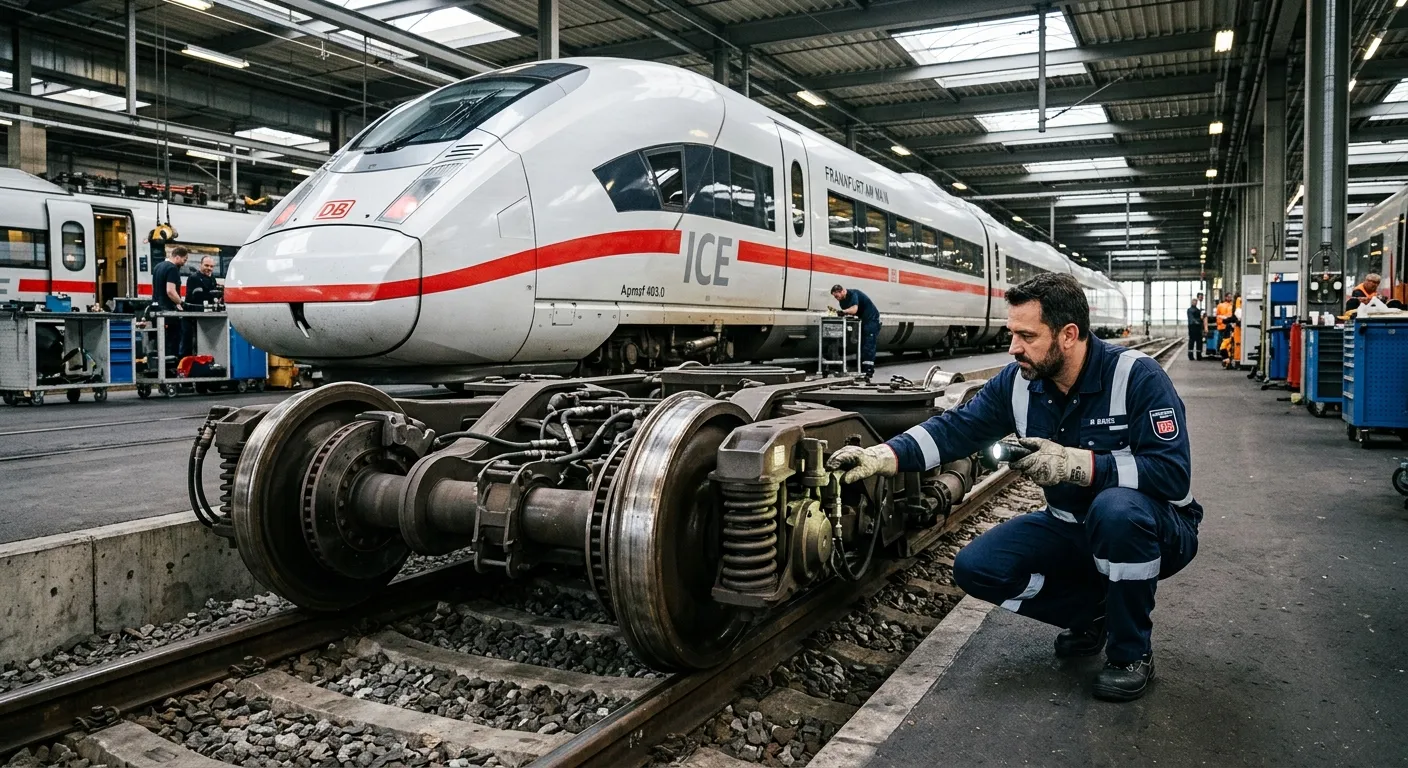
The driver then conducts a detailed pre-service safety check (PSSC) on their assigned train. This involves a meticulous external and internal walk-around inspection, checking brakes, couplers, doors, lights, and safety systems. Any defect must be reported and resolved before departure.
Throughout the shift, communication is constant and procedural. Drivers must report signals passed, adhere strictly to the Driver Reminder Appliance (DRA), and maintain continuous contact with signallers and control via the GSM-R radio system. This operational environment shares the high-stakes, procedure-driven nature of roles like an interim CTO managing critical IT infrastructure.
A Typical Shift Snapshot
- 06:00 Sign-on, briefing, and medical checks.
- 06:30 Pre-service safety check on locomotive.
- 07:15 Departure. Constant vigilance for signals, track conditions, and speed restrictions.
- 10:00 Arrive at destination. Short break before return service.
- 12:30 Conduct second PSSC for return journey.
- 15:45 Shift ends. Debrief and sign-off.
This structured, accountable workflow is a key reason the role commands a professional salary.
Managing Non-Driving Responsibilities
A significant portion of the role involves non-driving tasks that are critical to safety and service delivery. Drivers must complete extensive documentation, including defect reports, incident reports, and mileage logs. They are also responsible for customer communication during disruptions, making passenger announcements, and in some cases, managing emergency situations on board. This blend of technical skill and customer-facing responsibility is similar to that required in technical documentation and frontline management roles.
Comparative Analysis: UK vs. International Salaries
How does the UK train driver's pay packet compare globally? The figures reveal the UK's position as one of the higher-paying markets, reflecting the cost of living and union strength.
| Country / Region | Average Annual Salary (GBP Equivalent) | Key Context & Notes |
|---|---|---|
| United Kingdom | £54,000 - £75,000+ | Strong union agreements, high cost of living (especially London), incremental pay scales. |
| United States | £48,000 - £68,000 | Varies by freight (Class I railroads) vs. passenger (Amtrak). Senior freight engineers on long-haul routes can earn towards the top end. |
| Western Europe (e.g., Germany, France) | £45,000 - £60,000 | Generally strong social benefits and job security, but base salaries often slightly lower than UK top rates. |
| Australia | £50,000 - £65,000 | High demand in mining states for freight drivers; passenger roles in major cities are well-remunerated. |
| Canada | £43,000 - £58,000 | Freight is dominant. Pay can be high for remote work, but often involves long periods away from home. |
The UK's position at the higher end of the global scale is noteworthy. It underscores the value placed on the role within the national transport infrastructure and the effectiveness of collective bargaining. For employers, this means the UK market is competitive; retaining talent requires not just matching but exceeding these standards with comprehensive packages, much like the strategies needed for senior finance placements.
Case Study: The Financial Journey of a Career Driver
Following a hypothetical driver's career from trainee to instructor illustrates the long-term earning and progression potential.
Year 1-2: The Trainee Phase
£31,500 avg."Alex" secures a trainee position with a major TOC. Starting salary is £32,000. After 12 months of classroom learning, simulator sessions, and supervised handling, Alex passes the rules exams and handling assessment. By the end of year two, now a newly qualified driver, the salary increases to the bottom of the qualified driver scale.
Key Milestone: Obtaining the full Train Driving Licence, unlocking the qualified pay scale.
Years 3-7: Building Experience & Route Knowledge
£58,000 avg.Now fully qualified, Alex's salary increases incrementally each year. By year five, with a solid reputation for reliability and expanded route knowledge (learning several key corridors), base pay reaches £58,000. Through moderate overtime and Sunday working (premium rate), total annual earnings consistently reach £65,000-£68,000. Pension contributions are building significantly.
Key Milestone: Becoming a"productive" driver trusted with multiple routes and traction types, increasing roster flexibility and overtime opportunities.
Year 8+: Moving into Leadership & Instruction
£72,000+After demonstrating exceptional safety record and communication skills, Alex applies and is accepted for a Driver Manager/Instructor role. This position involves mentoring trainees, conducting competence assessments, and some managerial duties. The base salary increases to reflect the added responsibility. While overtime may reduce slightly, the higher base (now £72,000) and potential for bonuses linked to training outcomes provide a strong and stable income. The long-term value of the defined-benefit pension is now substantial.
Key Milestone: Transitioning from an operational to a leadership/development role, securing top-tier earnings and influencing the next generation of drivers. This career evolution mirrors the pathway from specialist to manager in fields like warehouse training or permanent recruitment consultancy.
This case study demonstrates that a train driver's earnings are not static. They represent a long-term investment in a career with clear, financially rewarding progression steps, combining secure base pay with significant enhancement potential.